
Watch the original file from one recorded Zombie Love Story generation below. Two separate fictional adult portraits entered the request, the scene prompt asked for a quiet rainy-street reunion, and the 5-second, 480P, 9:16 request consumed 30 credits according to the recorded ledger change. The result is published without trimming or post-generation editing.
Open the archived MP4. The file is 2,760,459 bytes, 480 × 832 pixels and 5.184 seconds long. Its SHA-256 is 1B2840EF7D398500B617AA711C54D0F69C49D36977EDA305684CEE5CD062D0C3.
This is evidence from one fixed request and one returned output. It does not show how often another request will preserve the same faces, hand movement, makeup, framing or ending. No repeated-run trial or automated identity score was performed.
Quick inspection: what does the original video actually show?
The pair already faces each other when the clip begins. Their hands move together early, then the same hand-holding pose continues in a steady portrait shot. Both faces remain visible through the inspected ending, but the requested recognition beat is subtle and the five seconds contain little action progression.
| Time | Observable check from this run | What it means |
|---|---|---|
| 1.0s | The two characters remain separate and recognizable as they look down and move their hands together; the hand-hold is not yet complete. | The input roles have not merged at this point. |
| 2.5s | The same two characters continue holding hands in one steady portrait shot; both faces remain visible. | The requested main action is present, with limited camera change. |
| 4.0s | Both faces remain visible and the hand-holding pose continues through the end of the clip. | Face visibility is retained, while action progression stays limited. |
These are first-party visual observations by the product team. They are not biometric conclusions, independent review or a promise about another generation.
Recorded inputs: man first, woman second
The generator sent each portrait as a separate subject reference. Position 1 defined the survivor; position 2 defined the loved one with fictional zombie styling. The files were not a start frame and an end frame, and the site did not precompose them into one fixed layout.

Image 1 — fictional man, survivor role

Image 2 — fictional woman, loved-one role
| Input | Recorded role | Bytes | SHA-256 |
|---|---|---|---|
| Fictional man portrait | Image 1 · survivor | 95,156 | C1F644A8EE8D40838A679620D6B68565DAA9FAFEE37949F83594109E4EB0E978 |
| Fictional woman portrait | Image 2 · loved one with fictional zombie styling | 95,908 | 08BF30E4F67F1A392EE4230E3DFC7705C027FD54420EAFF9B3723199F57197ED |
Exact editable prompt and the automatic prefix boundary
This was the editable prompt stored with the generation task:
Image 1 is a male survivor. Image 2 is his female partner with subtle, non-gory zombie makeup. In a quiet rainy street at night, they stand face to face. Recognition softens his expression as he gently takes her hand. A single continuous 5-second portrait shot with soft streetlight and quiet rain. Tender zombie love story, no violence or gore.The site automatically prepended this role and identity instruction when it submitted two references:
Image 1 is the survivor. Image 2 is their loved one, a person or pet as shown in the reference. Keep both subjects visually distinct, preserve the appearance of each subject from its own reference image, and never swap their identities.The boundary is intentional: a user could edit the first block; the site supplied the second block. The combined site-submitted prompt in the evidence record is a reconstruction from the stored editable prompt and the versioned server prefix deployed before the task. It was not saved as a separate database field. The provider's later expanded prompt is another distinct layer, available in the Love Story evidence manifest; its wording is instruction or planning text, not proof that the output satisfied every phrase.
Request record and 30-credit ledger entry
| Field | Recorded value |
|---|---|
| Site task created | 2026-10-09 05:47:58 UTC |
| Provider result recorded | 2026-10-09 05:48:05 UTC |
| Provider endpoint | minimax/h3-max/reference-to-video through fal |
| Duration requested | 5 seconds |
| Resolution requested | 480P |
| Aspect ratio | 9:16 portrait |
| Prompt expansion | Balanced |
| Safety filter | On |
| Sync mode | Off |
| Seed sent by the site | None |
| Seed returned by provider | 1514046115 |
| Site credit cost | 30 credits |
| Recorded ledger change | −30 credits |
| Post-generation editing | None; original output copied byte for byte to the evidence URL |
The timestamps come from the site task and provider result records, rather than creation metadata embedded in the MP4. The returned seed identifies this completed result; the current preset interface does not submit it and does not promise exact reproduction.
Three inspection frames from the same MP4
The frames below are checkpoints from the published output. Reading them in order exposes both the successful hand-hold and the limited change after it begins.
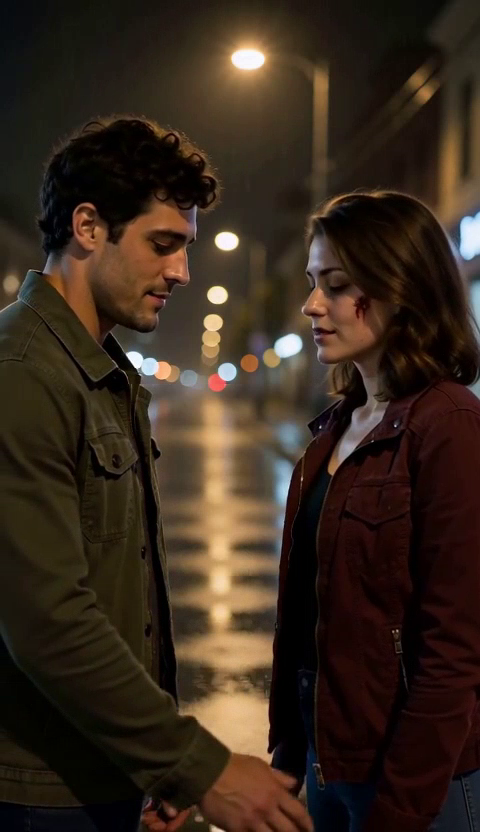
1.0s — separate roles; hand-hold not yet complete.
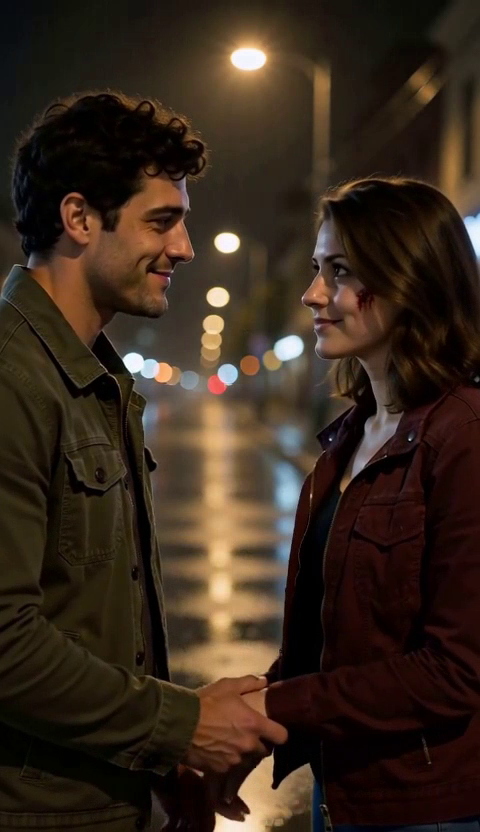
2.5s — hand-holding continues; both faces remain visible.
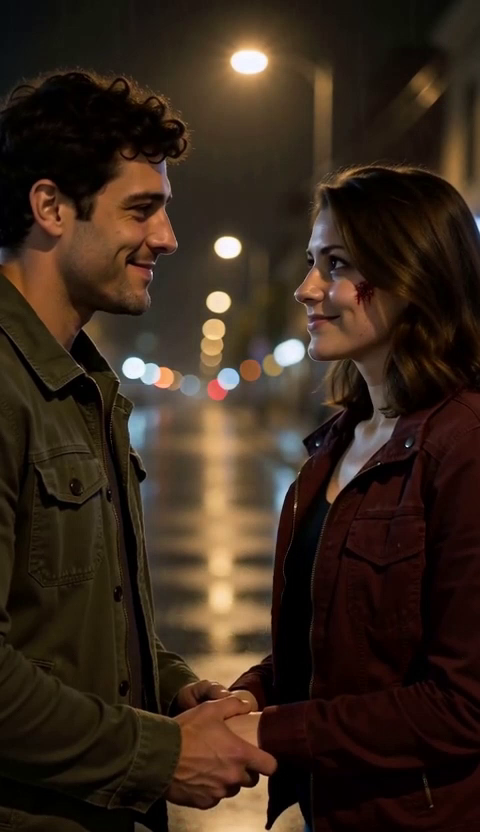
4.0s — both faces remain visible through the ending.
| Linked frame | Bytes | SHA-256 |
|---|---|---|
| 1.0-second frame | 582,946 | B427D665D342073E5EF4D257052E0B9626DF04BC319DE19E717A6C9004E1DA4E |
| 2.5-second frame | 606,126 | 6CDDD8B75C3593CEF864FE14BECF2D8C7A2FC28BBA656A43F808AD6AE57571F3 |
| 4.0-second frame | 529,164 | ED78EC471FAB18A5888DFFE44E7F45EF3C2CDC94F5D73AB69124CF42661808C9 |
Where does this result fall short?
- The recognition beat is weak. The characters begin face to face, so the change from recognition to tenderness appears as a small expression shift rather than a clear story turn.
- The action plateaus early. Hand-holding starts near the beginning and persists, leaving little visible progression across five seconds.
- The makeup is not fully subtle. The woman's cheek marks are more pronounced than the prompt requested.
- Identity was judged visually. No automated face-similarity score was calculated.
- Repeatability is unknown. No multi-run test was performed, and one successful output does not establish a success rate.
A revised prompt could ask the pair to begin one step apart, make eye contact, and complete the hand-hold only near the final second. That change would require a new generation and another credit charge; it would not guarantee the revised timing.
Evidence, checksums and the reusable setup
- The single-run evidence manifest contains the input order, exact prompt layers, provider-expanded prompt, returned seed, request settings, ledger change, original output metadata, observations and limitations.
- The first-party checksum index links this record and the separate Hug record without treating them as repeat attempts.
- The current Love Story preset loads a convenient pair of sample portraits and an editable prompt. It is mutable; the checksummed files and versioned record identify the historical request shown on this page.
The verified-... record token means the AI Zombie Team performed a first-party integrity check of the listed files, metadata and checksums. It does not indicate third-party verification, certification, independent review or reproducibility.
Can this example predict my next zombie love story video?
No. It lets you audit one original file against one disclosed request. Another run can produce different identity fidelity, motion, makeup, composition and timing, even if the same preset is loaded. Use this video to understand the workflow and visible tradeoffs, not as a guarantee of a repeatable result.