
This is one unedited 5.184-second AI zombie hug generated from two separate fictional adult portraits. The request asked for a gentle embrace on a misty path, used 5-second, 480P, 9:16 settings and showed a 30-credit cost. Watch the original output first; the exact inputs, prompt boundary, settings, inspection frames and visible failures follow below.
Open the original MP4 directly. It is 3,013,877 bytes, 480 × 832 pixels and 5.184 seconds long. Its SHA-256 is DA935F0435E5596D4DEF3470E575298CEDD7DC783AD9E0B5C62C7A0F6E825EA5.
This page documents a single generation, not a representative sample. A second run may change the faces, motion, makeup, framing or ending. No multi-run repeatability test or automated face-similarity score was performed, so this output does not establish a success rate.
What happens in this AI zombie hug video?
The woman and man begin apart on a misty path and move into an embrace. The requested action fits inside the short clip, but the result also misses two details: the man's facial scratches are stronger than the requested subtle makeup, and the final pose hides most of the woman's face.
Use the player and the three extracted frames together:
- 1.0 seconds: both fictional characters are separate and visually recognizable from their own input portraits.
- 2.5 seconds: the requested embrace has started; the man's facial scratches are stronger than the prompt requested.
- 4.0 seconds: the embrace is complete; most of the woman's face is hidden against the man.
Those are product-team visual observations of this file. They are not biometric measurements or independent review findings.
Which two images produced the recorded hug?
The request sent two position-bound subject references. It did not use them as opening and ending keyframes, and it did not combine them into a single still before generation.

Image 1 — fictional woman, survivor role

Image 2 — fictional man, loved-one role
| Input asset | Position and role | File size | SHA-256 |
|---|---|---|---|
| Fictional woman portrait | Image 1 · survivor | 95,908 bytes | 08BF30E4F67F1A392EE4230E3DFC7705C027FD54420EAFF9B3723199F57197ED |
| Fictional man portrait | Image 2 · loved one with fictional zombie styling | 95,156 bytes | C1F644A8EE8D40838A679620D6B68565DAA9FAFEE37949F83594109E4EB0E978 |
What exact prompt was editable, and what did the site add?
The following text was the editable user prompt saved with the task:
Image 1 is a female survivor. Image 2 is her male partner with subtle, non-gory zombie makeup. On a misty path, they stand close together and slowly draw into one gentle hug. A single continuous 5-second portrait shot, soft dawn light, steady camera, and quiet wind. Emotional AI zombie hug, no violence or gore.For a two-reference request, the site automatically placed this role and identity prefix before the editable text:
Image 1 is the survivor. Image 2 is their loved one, a person or pet as shown in the reference. Keep both subjects visually distinct, preserve the appearance of each subject from its own reference image, and never swap their identities.That boundary matters: the first block was editable in the generator; the second was added automatically by the site. The historical combined submission is reconstructed from the saved editable prompt and the versioned server prefix. It was not stored as a separate database field. The provider then returned its own expanded prompt, which is preserved in the machine-readable evidence manifest; text in that expansion is generation planning, not an observed quality score.
What settings and cost were recorded?
| Request field | Recorded value |
|---|---|
| Provider endpoint | minimax/h3-max/reference-to-video through fal |
| Reference workflow | Two separate, position-bound subject references |
| Requested duration | 5 seconds |
| Resolution | 480P |
| Aspect ratio | 9:16 portrait |
| Prompt expansion | Balanced |
| Safety filter | On |
| Requested seed | None submitted |
| Provider-returned seed | 1752141060 |
| Site request quote | 30 credits |
| Editing after generation | None; original task output |
The 30-credit number is the site's recorded request quote for this task. This record does not claim a measured ledger change for the hug run. Recording the provider-returned seed identifies metadata from this result; the current preset interface does not submit that seed or promise exact reproduction.
Inspect the original at 1.0, 2.5 and 4.0 seconds
All three images below were extracted from the same MP4 in the player. They show the evidence behind the observations instead of selecting only a flattering final frame.
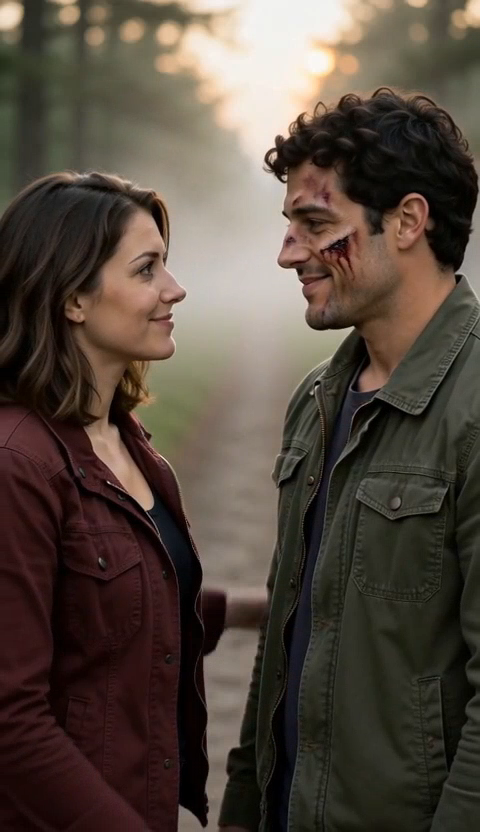
1.0s — separate roles; both subjects remain recognizable.
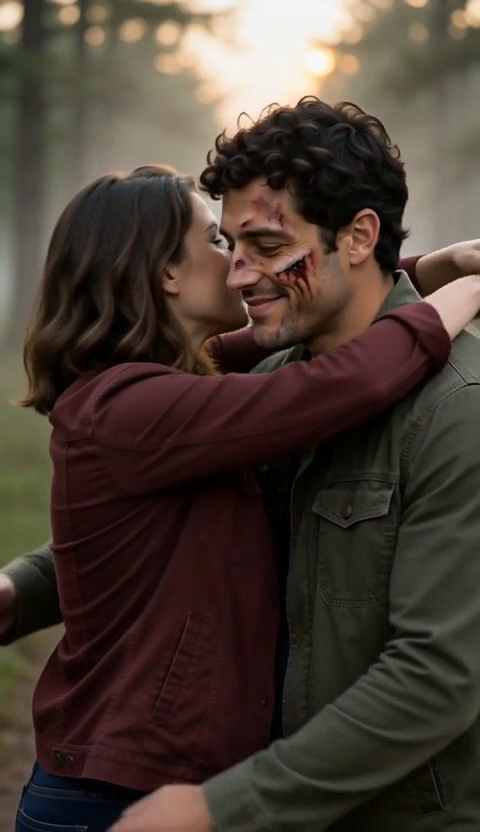
2.5s — embrace begins; facial scratches exceed the subtle request.
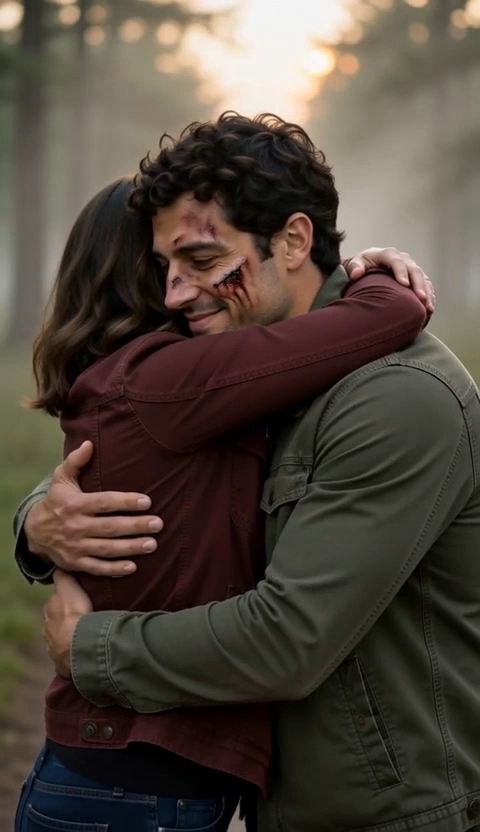
4.0s — completed hug; most of one face is obscured.
| Inspection asset | File size | SHA-256 |
|---|---|---|
| Frame at 1.0s | 443,432 bytes | 2C4DF7887B934F6BF27537E7587263D87C8B272CB458377B15539BAAB35E70E8 |
| Frame at 2.5s | 438,085 bytes | B8B5218A92FBBDCDFA364D3BB5829BAF5F1407AED29C147CB0E8B75155A88E97 |
| Frame at 4.0s | 367,102 bytes | D72153D6049B52C3E19F34A5496BF1B882E0C5F413D56669545571F358C9B04C |
What are the visible limitations?
- Makeup strength: the fictional zombie styling is stronger than the prompt's request for subtle makeup.
- Face visibility: the final embrace hides most of the woman's face.
- No similarity score: the review did not calculate automated face similarity.
- No repeatability study: only one generation was run with this fixed setup.
- No success-rate claim: one usable output cannot establish how often the same setup will work.
If a visible face at the end matters more than a full embrace, edit the action to request a side-by-side shoulder hug with both faces turned toward the camera. That would be a new paid generation, and its result could still differ.
How can I audit or reuse this example?
- Open the AI zombie hug evidence manifest for the exact prompt layers, timestamps, provider metadata, byte counts, SHA-256 values, observations and limitations.
- Open the combined first-party checksum index to compare this record with the separate Love Story run.
- Load the current reusable hug setup to place two sample portraits and an editable prompt in the generator. This convenience preset can change; the checksummed evidence files identify the historical run shown here.
The verified-... record name means the AI Zombie Team performed a first-party integrity check of the listed files, metadata and checksums. It does not mean third-party verification, certification, independent review or reproducibility.
Does this video prove another run will look the same?
No. This page preserves one original output and the evidence needed to inspect it. It does not prove that another request will keep the same identity, motion, makeup, composition or ending. Treat the clip as an auditable example of one run, then budget separately for any retry.